
For many first-time homebuyers, a home warranty can provide valuable peace of mind. Knowing that major appliances and systems may be covered helps make the costs of homeownership more predictable and eases the transition into owning a home.
Rental properties, however, operate very differently than owner-occupied homes. As Pensacola’s largest property management company serving Northwest Florida for nearly 30 years, we've found that while home warranties promise savings, they often come with hidden costs and nuances that outweigh the benefits for real estate investors. Whether you own a single rental home or a growing real estate portfolio in Pensacola, Gulf Breeze, Pace, Milton, Cantonment, Navarre, or surrounding communities, understanding the true cost of maintenance is critical to protecting your investment.
What Is a Home Warranty?
A home warranty is a service contract that helps pay for the repair or replacement of certain home systems and appliances that fail due to normal wear and tear. When a covered item breaks, the homeowner submits a claim, pays a service fee (typically $75–$150), and the warranty company dispatches one of its approved contractors. Annual plans generally cost $400–$900, depending on the level of coverage and optional add-ons. Most standard plans cover major home systems and appliances such as air conditioning, heating, plumbing, electrical systems, water heaters, and appliances.
It’s important to read what is covered and what is excluded in your policy as even common items like kitchen faucets and ice makers can be excluded from your policy. However, home warranties also have important limitations. General exclusions include:
- Roof leaks and structural components
- Pest damage
- Windows and doors
- Cosmetic damage
- Known or pre-existing conditions
- Improper installation or code violations
- Routine maintenance and cleaning
- Septic systems, well pumps, spas and pools.
- Damage caused by neglect or lack of maintenance
- Secondary damage (such as drywall or flooring damaged by a plumbing leak)
- Landscaping, irrigation systems, fencing, and other outdoor structures (unless optional coverage is purchased)
For many owner-occupied homes, particularly for first-time homebuyers, a home warranty can offer predictable repair costs and valuable peace of mind. For rental properties, however, the equation is very different. Delayed repairs can impact tenants, create legal obligations for landlords, increase vacancy risk, and ultimately affect your investment's profitability. Once you factor in the annual premium, service call fees, and the hidden costs discussed below, such as repair delays, administrative time, rent concessions, and tenant dissatisfaction, many investors discover they spend more with a home warranty than they would paying for repairs directly.
The greatest financial benefit of a home warranty typically comes when it covers the replacement of a major expense, such as an HVAC system, water heater, or kitchen appliance. However, because warranty companies are generally incentivized to repair rather than replace covered items whenever possible, homeowners often experience multiple repair attempts before a replacement is approved, extending downtime, frustration, and expenses.
The Cost You Don't See: Time
One of the biggest hidden costs of a home warranty is time. The most common challenge we encounter is the lack of urgency surrounding repair requests. Before a repair can even begin, claims often require approvals, vendor assignments, scheduling, and additional authorizations, adding days, or even weeks, to what should be a straightforward repair.
In many cases, the warranty company assigns regional contractors who travel to Pensacola only on certain days of the week, further delaying service. When an air conditioner fails during a Florida summer or a water heater stops working, those delays can have serious consequences. Rental properties require prompt decisions and immediate action to meet tenant expectations and landlord obligations, not extended approval processes, limited contractor availability, and repeated repair authorizations.
Many home warranty claims involve:
- Waiting for claim approval before work can begin.
- Assigned contractors with limited availability.
- Multiple repair attempts before replacement is approved.
- Additional authorizations for parts or labor.
- Repeated follow-up between the property manager, warranty company, contractor, owner, and resident.
While these steps may seem minor individually, together they can delay repairs by days or even weeks.
Delays Become Expensive
Many investors purchase home warranties hoping to reduce maintenance costs. Unfortunately, delayed repairs often create expenses that aren't covered by the warranty itself. Extended repair timelines can result in:
- Resident frustration and dissatisfaction.
- Rent concessions or credits.
- Emergency temporary repairs.
- Additional property damage while waiting for approvals.
- Increased administrative time coordinating claims.
- Lost productivity for owners, contractors, and property managers.
In some situations, the cost of the delay exceeds the amount the warranty ultimately saves.
Warranty Coverage Isn't Always "Full Coverage"
Another common misconception is that a home warranty pays for everything. In reality, owners are often still responsible for expenses such as:
- Permit fees.
- Code-required upgrades.
- Refrigerant.
- Disposal fees.
- Installation modifications.
- Items specifically excluded from the warranty contract.
Even when a major component is approved for replacement, owners are frequently surprised to learn there are still significant out-of-pocket costs.
Real Experiences We've Seen
After managing thousands of rental properties over the past three decades, we've experienced these situations firsthand. We’ve also seen the value that home warranties provide diminish over time. Here’s a few recent issues we’ve experienced.
- Recently, a dishwasher claim required three separate service calls and more than two months before the appliance was finally replaced.
- Another property went nearly two weeks without hot water after a failed water heater while appointments were postponed and approvals delayed. The installation later failed inspection, additional repairs were needed, and the owner ultimately provided rent credits to the resident that ate up any potential savings.
- We've also experienced refrigerators remaining inoperable for months while warranty companies assigned multiple vendors before determining replacement parts were no longer available.
These are not isolated incidents. Delays involving HVAC systems, plumbing, appliances, and other essential home components have become increasingly common. In many cases, owners ultimately abandon the warranty process altogether and pay out of pocket for replacements after waiting weeks—or even months—for repairs or approvals. By that point, the savings they hoped to achieve through the home warranty have often been outweighed by prolonged vacancies, tenant dissatisfaction, rent concessions, and the additional costs associated with the delays.
What Consumer Advocates Say about Home Warranties
Even independent consumer organizations caution buyers to carefully evaluate home warranties. Consumer Reports notes that while home warranties can provide peace of mind and may make sense for some homeowners, buyers should carefully review coverage limitations, exclusions, and claim requirements. Their general recommendation is that many homeowners are better served by setting aside money in a dedicated repair fund rather than relying on a home warranty.
We believe that's especially true for rental properties.
While a home warranty may reduce the cost of an individual repair, it doesn't eliminate the hidden costs of delayed approvals, administrative coordination, multiple service calls, and resident dissatisfaction. Those are expenses that don't appear on a warranty brochure but can have a significant impact on the profitability of an investment property.
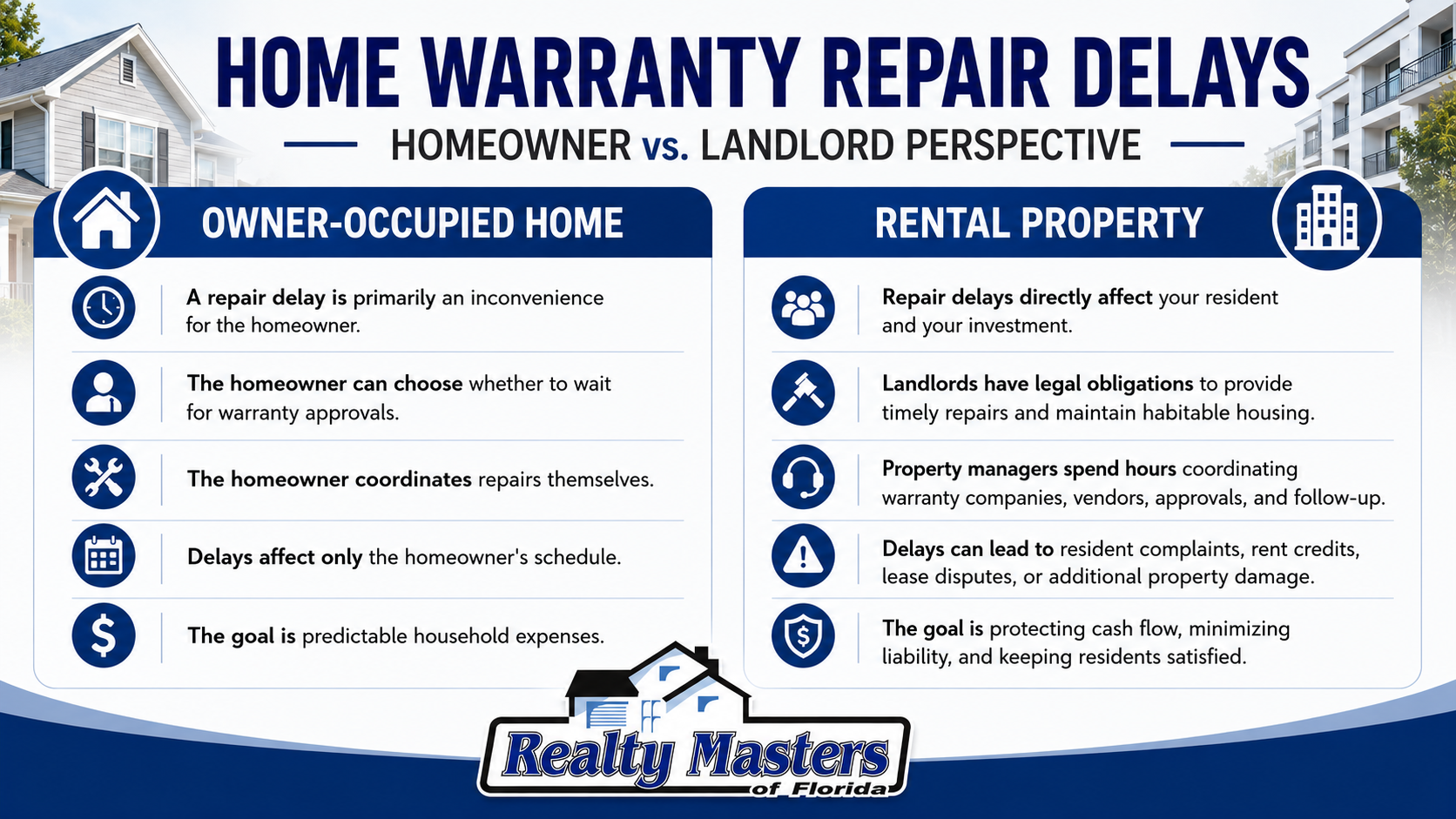
Owner-Occupied Homes vs. Rental Properties
This is where many investors make the mistake of comparing rental homes to personal residences. Although they may look the same, they operate very differently. A rental property is a business asset. Every day a repair is delayed can carry a financial cost that extends well beyond the repair bill itself.
Why We Prefer Local Contractors
For nearly 30 years, Realty Masters has built strong relationships with dependable local contractors throughout Northwest Florida.
These partnerships allow us to:
- Respond to maintenance issues quickly.
- Prevent small problems from becoming expensive ones.
- Protect your property from additional damage.
- Keep residents satisfied.
- Receive competitive pricing through trusted local vendors.
- Provide consistent communication throughout the repair process.
Rather than waiting on warranty approvals, we're able to focus on what matters most—protecting your investment and providing excellent service to your residents.
Our Commitment to Property Owners and Tenants
At Realty Masters, our responsibility is to protect your investment while providing exceptional service to your residents. Our experience has shown that working directly with trusted local contractors allows us to resolve maintenance issues faster, reduce liability, improve resident satisfaction, and protect the long-term value of your investment and that working with home warranty companies provide the opposite outcomes. We also have a commitment to protect and serve your residents.
Sometimes the lowest upfront cost isn't the lowest overall cost.
For rental property owners, the true cost of maintenance isn't measured solely by the repair bill. It's also measured by response time, resident satisfaction, liability, and protecting your investment. While home warranties can provide peace of mind for homeowners, we've found that responsive local service is the better investment for Pensacola rental properties. Our goal has always been simple: resolve maintenance issues quickly, protect your property, keep your residents happy, and maximize your long-term return on investment. If you're looking for an experienced Pensacola property management company that puts your investment first, we'd love to show you the Realty Masters difference.